Integrated Science
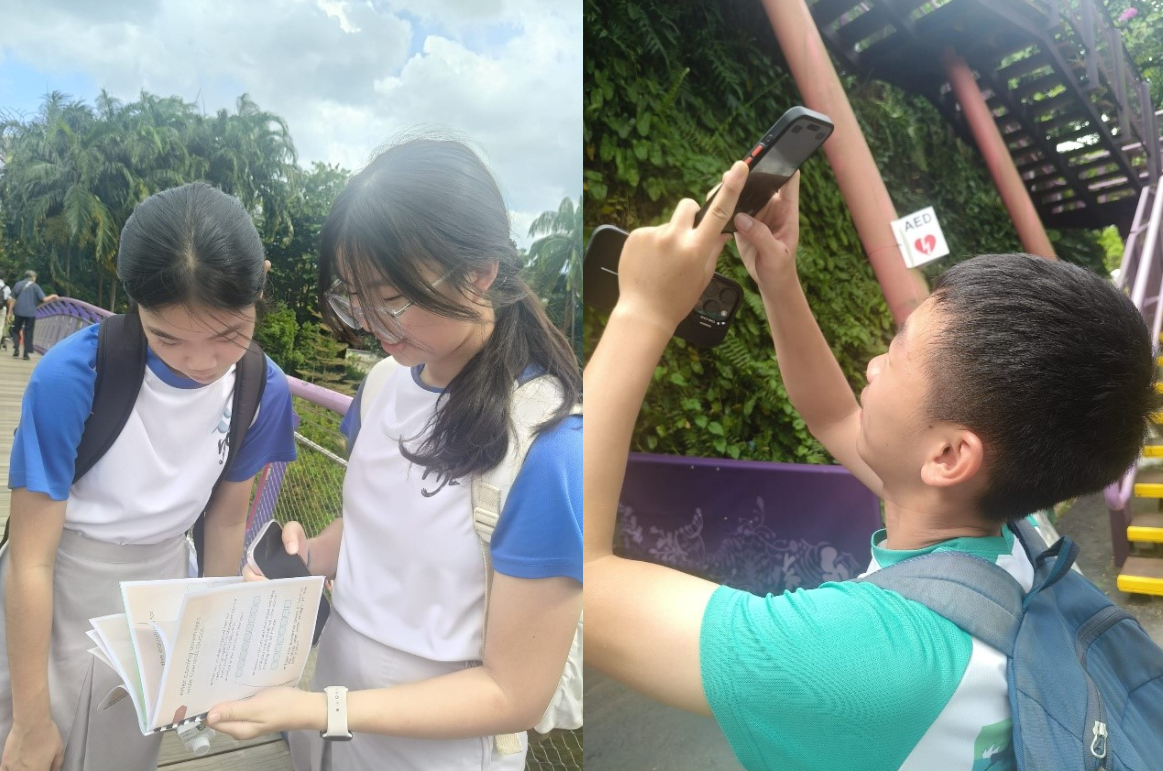
The Junior High (JH) Science Programme aims to develop our students as self-regulated learners and critical thinkers, who appreciate the interconnectedness between Science and the world through experiential learning on the Nature of Science (NOS), who contribute to the society as concerned citizens and enthusiastic lifelong learners.
To this end, we employ VanTassel-Baska’s Integrated Curriculum Model in the design of our Year 1 to Year 4 JH Science curriculum. This framework focuses on content advancement, authentic learning processes, and product-based work, alongside intra- and interdisciplinary concept development. Our curriculum is anchored in the Practices of Science, which include demonstrating Ways of Thinking and Doing (WOTD), understanding the Nature of Scientific Knowledge (NOS), and relating Science-Technology-Society-Environment (STSE). Besides looking forward to embarking on STEM learning experiences, our students will have valuable and meaningful opportunities to explore how big, transferable ideas can transcend context, location and time, and how they can hone their “learn-to-learn" and self-mastery skills as well as gain greater appreciation for collaboration!
The Junior High Science curriculum consists of the following modules:
Integrated Sciences
The Nature of Science
As an introductory module, this module aims to provide students with a solid foundation in essential skills (i.e. initiating and planning, performing and recording, analysing and interpreting as well as communicating and working in teams), which are integral to the Practices of Science. The variety of topics covered will equip them with a broad understanding of science, with a unique emphasis on the Nature of Science that is crucial to the development of the discipline. Besides recognising diversity and patterns in the world, they will deepen their appreciation on how models can be used to aid their understanding of various phenomena.
A Science Expedition
Through appreciating the Nature of Science and learning the ways of thinking and doing Science, let’s continue to be curious and inquisitive about the world around us through opportunities to investigate and reason.
This module breaks down the fundamentals of matter, enabling students to better understand the different types of interactions around them, to learn about how different elements in various systems contribute and are interconnected, as well as model the motion of objects. They will go on a journey through the historical development of scientific concepts and how they can be used to interpret the observations students make.
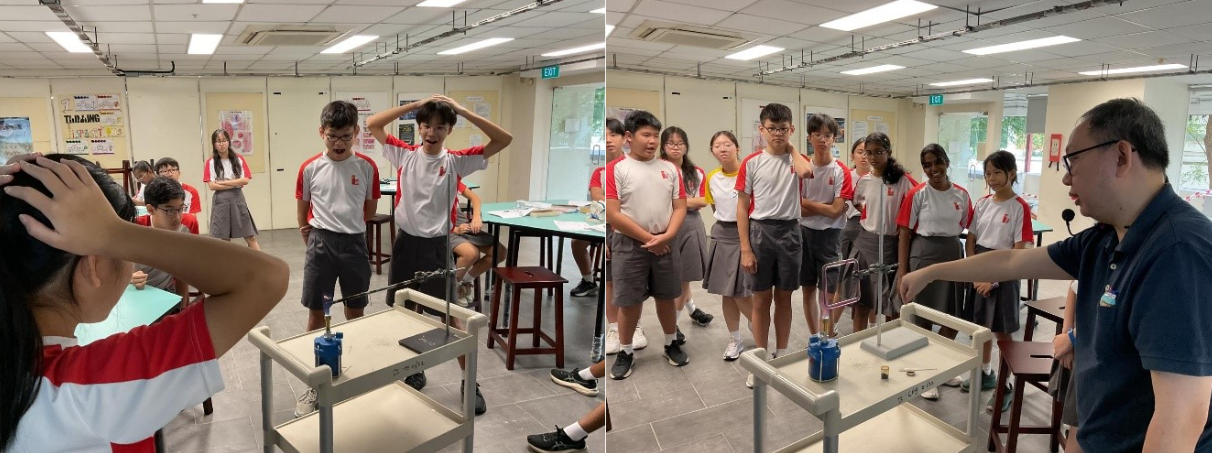
Chemistry
In the Upper JH years, our students will work towards understanding Chemistry
at a fundamental level, exploring the basic building blocks of matter and
how they combine to form new substances. Using Chemistry as an investigative
tool, we will go on an exciting journey where students step into the shoes
of chemical science investigators to acquire essential skills in analytical
chemistry. The curriculum also introduces the foundations of physical chemistry,
emphasising the intimate relationship between energy and matter to explain
the changes we observe. Through team-based and experiential learning, students
will utilise these concepts to enhance their problem-solving skills and
resolve issues pertinent to improving our everyday lives.
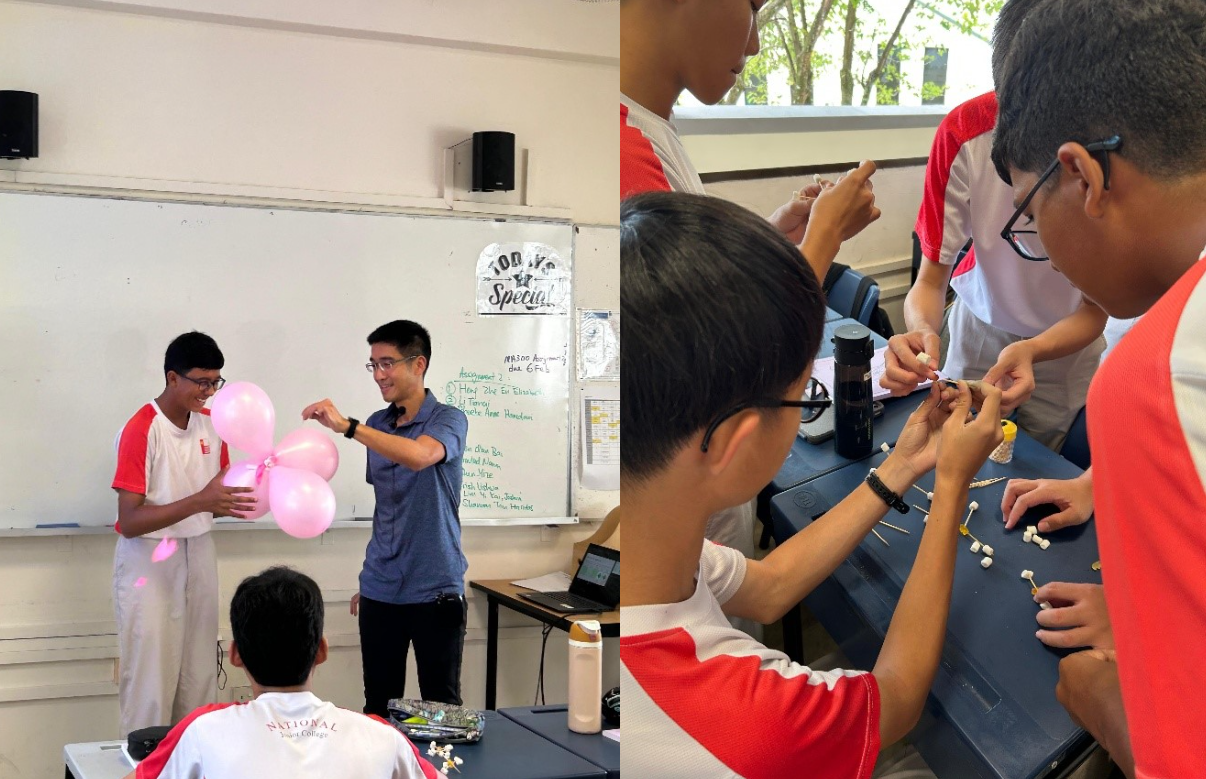
Physics
The study of Physics aims for us to better understand and appreciate the
natural world around us. Adopting a scientific lens and equipping young
minds to investigate, evaluate and reason critically, we will explore and
question phenomena that early philosophers and physicists faced. From the
study of Newton’s great contribution in the development of mechanics to
the exploration of the exciting discoveries in electromagnetism, we will
engage in a variety of experiential learning activities to understand how
things work and see the relevance of Physics in our lives.
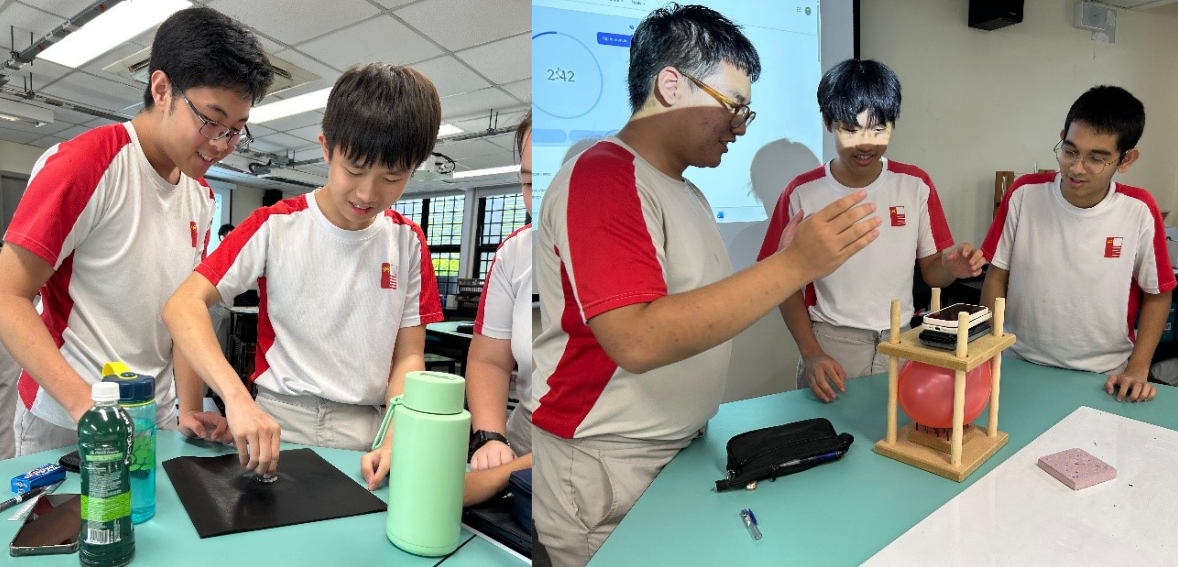
Biology
It often goes unnoticed that the physiological processes necessary to
keep the human body healthy and in balance, require an incredible number
and diversity of molecules. We will look at how essential elements come
together to generate the diversity of molecules which form the basics of
biological systems and how these molecules are organised to form a cell
and the roles they play. Equipped with this knowledge, our students will
then learn about the anatomy (study of body structure) and physiology (study
of the functions of body parts) of the human body, to explore an important
theme in Biology – “Continuity of Life”. Our students should recognise
and be able to explain the importance of interactions between the different
body systems in maintaining dynamic Physiological constancy even when the
external environment changes.
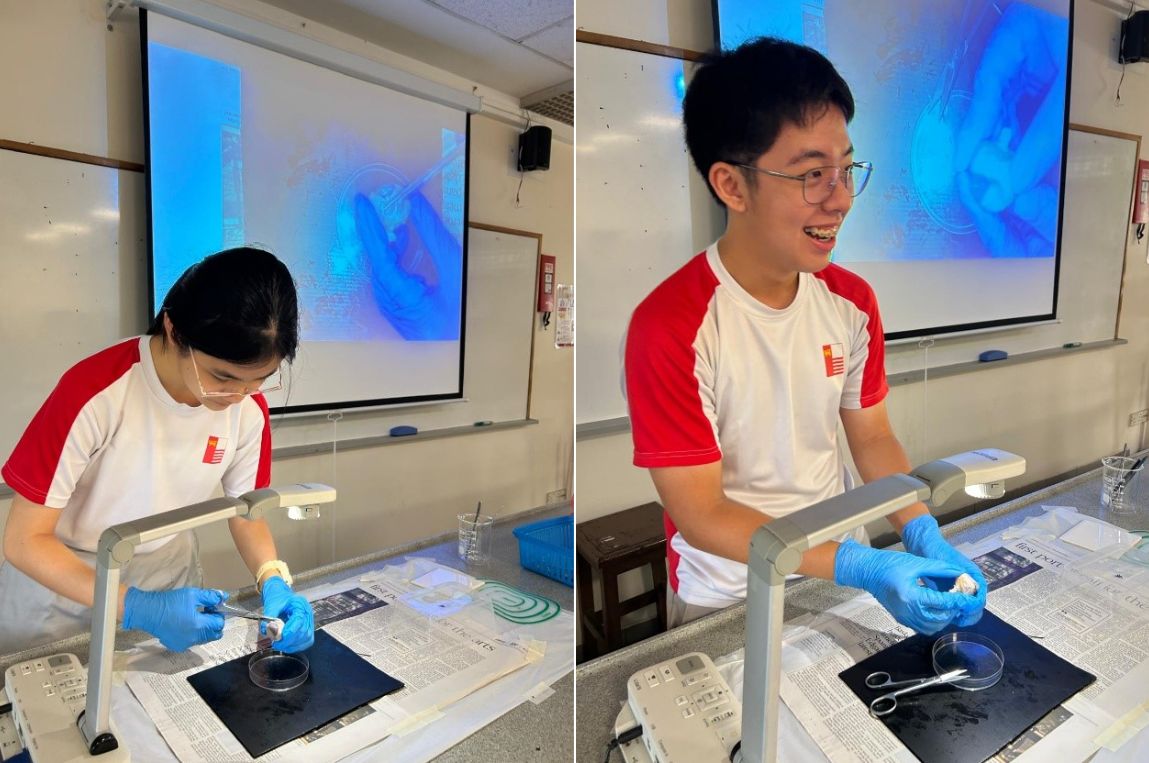
Advanced Sciences
Students will delve into the depth of specific scientific fields, giving them the room to specialise and master their chosen interests. These focused opportunities are provided through immersive learning journeys that connect advanced concepts to real-world applications. Furthermore, students will actively apply their in-depth scientific knowledge through targeted service-learning initiatives. By engaging directly with the community to solve complex problems—as well as through a variety of experiences ranging from presentations to competitions—students will sharpen their science communication skills, learning to effectively convey complex scientific ideas to diverse target audiences.