

Language Arts and Thinking
LA Department Philosophy, Mission, Vision
Philosophy
The LA Department believes that language is a key vehicle of thought.
Language is not just a tool for thinking, learning and sharing of learning;
it is also a means for us to socialise, articulate opinions, express identities
and negotiate our relationships with the world around us. In an increasingly
globalised world where rapid development in information technology is part
of our lives, there is a greater need for linguistic and communicative
competence. As communication increasingly spans diverse modes and platforms,
the curriculum emphasises multiliteracies, enabling students to communicate
effectively through written, visual, audio, and digital forms for different
audiences, purposes, and contexts.
Mission
The Language Arts programme aims to develop students’ ability at effective
communication by developing their receptive skills (listening, reading
and viewing), productive skills (speaking, writing and representing) and
thinking skills in a progressive way. Students will recognise that text
and language choices are based on audience, purpose and context.
Vision
To nurture creative and critical thinkers who are effective communicators
and collaborators who can express themselves with accuracy and fluency.
Through our programme, students become courageous and civil communicators,
discerning readers and creative and critical thinkers.
|
|
JH1 |
JH2 |
JH3 |
JH4 |
|
|
Macro Concept |
Change |
Tension |
Structure |
Relationships |
|
|
LA Sem 1 |
History-LA |
Romeo & Juliet |
Family, Education, Community |
Keeping SG Special |
|
|
LA Sem 2 |
Science Fiction |
Reading, Writing |
Morality |
||
|
Thinking (All year) |
Inference |
Assumptions, Informal Fallacies |
Paul’s Wheel |
Paul’s Wheel |
|
|
SPIRE |
|
|
Literature/ Linguistics |
|
|
|
Literature |
|
|
Literature
|
Literature (Practical Criticism and Prose); Governance and Society (TBC) |
|
|
Man and Ideas [Elective module] |
|
|
Epistemology (Sem 2) |
Ethics (Sem 1) |
|
|
Examples of Some Enrichment & Extension Opportunities |
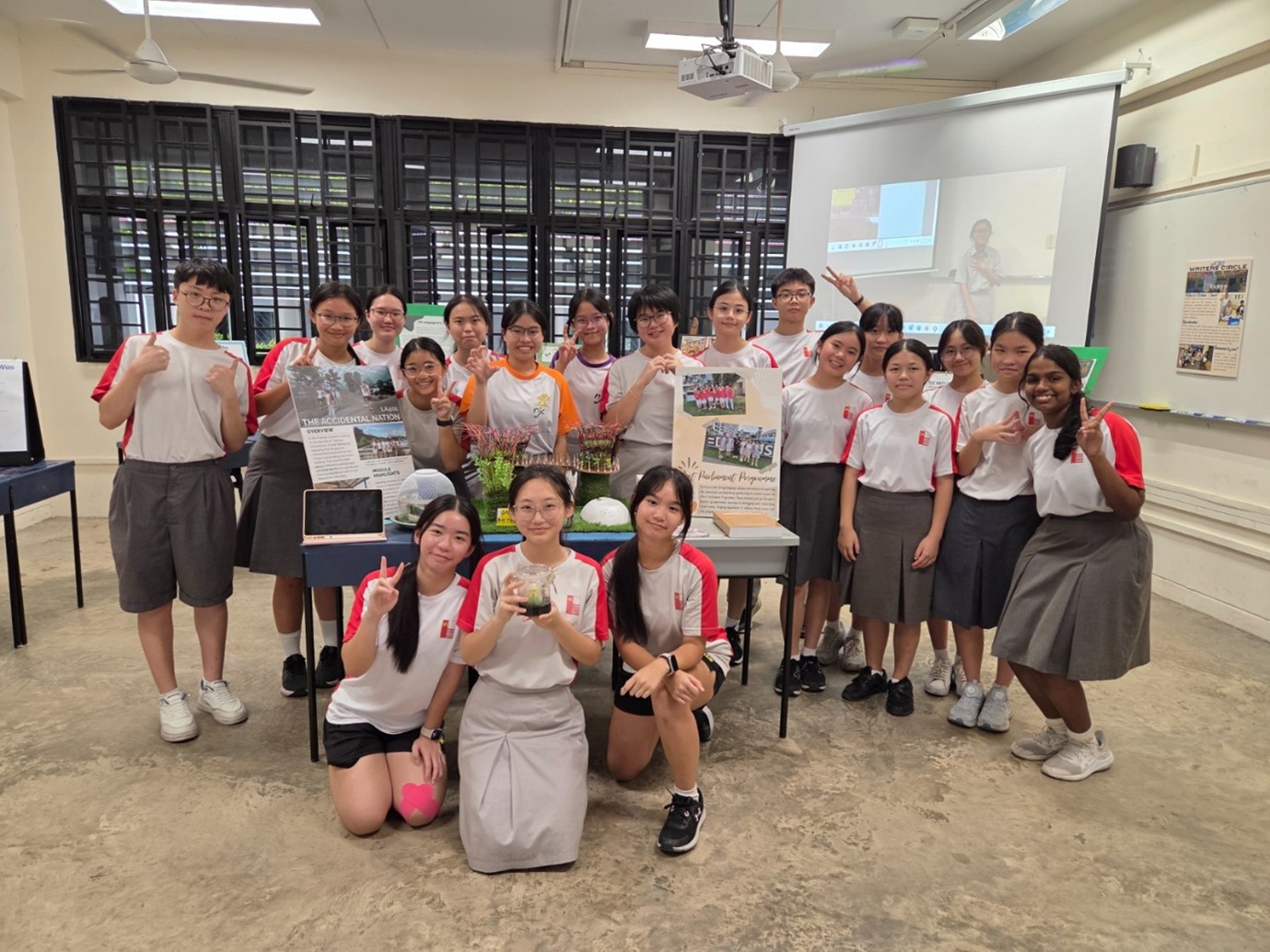
Level 3: MOE HSSRP, Moot Parliament Programme (MPP) Level 2: MOE Creative Arts Seminar (CAP), Plain English Speaking Awards (PESA), Literature Seminar Level 1: National Schools Literature Festival, Queen's Commonwealth Essay Writing Competition, Writer's Circle |
||||
Thinking (@Lower JH)
Critical thinking is incorporated and taught throughout the four years
in Language Arts lessons. Students are introduced to Richard Paul’s Wheel
of Reason to help them to analyse, understand and evaluate the texts and
issues that they encounter.
From JH1, students are made aware of the processes involved in critical thinking when they are exposed to inference and assumptions, two of the elements of reasoning in ‘The Elements of Thought’. As they move up the levels, they will be exposed to more/all elements of reasoning and be given ample opportunities to apply their critical thinking and reasoning in class, through their work and under assessment conditions.
For upper JH students who enjoy critical thinking, they may be offered an elective called Man and Ideas (MI). Using inquiry as the approach to learning, MI engages students in questioning, challenging assumptions and known knowledge, exploring what they do not yet know, and in so doing, make them better thinkers and decision-makers.
Language Arts Talent Development
We are committed to nurturing the next generation of writers, thinkers,
and speakers. Students who display a natural flair and a passion for the
language and literary arts are invited to participate in specialised talent
development tracks. This pathway is designed to sharpen critical thinking,
refine creative expressions, and provide a platform for student voices.
Here is an overview of how we challenge and inspire our identified students:
-
Creative Writing & Literary Arts
-
The Writer’s Circle
A mentorship platform for Junior High (JH) students who demonstrate high language proficiency and a distinct creative spark. This programme bridges the gap between classroom learning and the literary world.-
Creative mentorship: Members engage in monthly or bimonthly workshops dedicated to the craft of writing. These sessions emphasise a professional approach involving peer critique, editing and the development of a unique personal voice and signature writing style.
-
Portfolio development: Members engage in a drafting process to produce polished work for national and international competitions. This includes curating submissions for the Creative Arts Programme (CAP), and global open calls for publication.
-
Literary leadership: As the heartbeat of NJC’s literary scene, members take an active role in shaping the College’s creative culture. They curate online zines, organise Literature Evenings, and lead initiatives that foster a vibrant community of readers and writers.
-
-
Creative Arts Programme (CAP)
This is an invitation-only programme for JH2 and JH3 students. Entry is based on the submission of a strong creative portfolio. Selected participants gain access to a residency-style experience featuring:-
Masterclasses and workshops: These are collaborative sessions where young writers work alongside peers and learn from established writers;
-
Enrichment seminars: Immersive sessions that explore contemporary issues in literature, aesthetics and the broader arts landscape;
-
Performance workshops: Specialised workshops led by professional arts practitioners. Participants gain the opportunity to learn an art form and develop original performances for showcase.
-
-
Literature Seminar (under MOE GEB)
Literature Seminar is an annual event held in August. It comprises literary enrichment workshops by prominent writers or academics of Literature in Singapore, as well as presentations on literary research projects by secondary school students. It provides participants with a better understanding of the breadth of literary studies. This is typically offered to upper JH students offering Advanced Language Arts.
-
Writing Competitions
We provide budding writers with various platforms to showcase their work. Some platforms include the Royal Commonwealth Essay, Torrance Creative Writing, Foyle Young Poets, A*STAR Science Chronicles.
-
-
Oratory, Rhetoric & Performance
Opportunities to hone rhetorical skills and build stage confidence:-
Plain English Speaking Competition (PESA)
An opportunity for students keen on mastering the art of oratory. PESA focuses on developing a “personal voice”, building confidence in public presentation, and learning from other proficient young speakers. -
National Schools LIterature Festival (NSLF)
A biennial event, the National Schools Literature Festival (NSLF) is a powerful platform to develop students’ passion for literature. Students present the College in diverse competitive categories, including Choral Speaking, Flash Fiction, Unseen Debates, and Book Trailer production.
-
-
Research, Policy & Advocacy
Advanced programmes for students interested in applying their linguistic skills to the study of society, law and governance:-
Humanities and Social Sciences Research Programme (HSSRP)
A research initiative for JH3 and JH4 students who seek to move beyond the classroom into the realm of academic inquiry. This programme pairs aspiring scholars with expert academic researchers who will guide them through formal investigations into complex social, cultural and literary issues.
-
Moot Parliament Programme (MPP)
The MPP offers selected participants an insider’s view of Singapore’s legislative framework. Guided by expert-mentors from the legal profession, students research into national concerns and develop insights into the art of bill drafting. They will gain a deep understanding of how public policy is shaped and codified into law. The programme culminates in rigorous parliamentary debates, where students defend their proposed legislation using logic, evidence and oratorical skill.
-