History
“History is who we are and why we are the way we are.” - David McCullough, American historian
NJC History seeks to empower students to become global citizens through an appreciation of how past events have shaped the world we live in today. Through an inquiry-based learning approach, students encounter and learn to empathise with different perspectives and interpretations of the past, and learn to navigate their way in an uncertain and complex world. Through these encounters, our students develop a sense of curiosity and wonder about the world in which they live, and are encouraged to practice informed, discriminating and active citizenship essential to building society and nation.
The Senior High History curriculum is closely aligned with the GCE A-Level syllabus – students may opt to offer the subject at the following levels of study:
H1 History (Syllabus 8838)
Students will learn how the watershed of World War II ushered in the Cold War, an iconic superpower rivalry whose ideological clashes, proxy conflicts, and strategic manoeuvres continue to echo in today's multipolar world. This global contest profoundly shaped East Asia through evolving superpower ties with China and Japan, while in Southeast Asia, it intertwined with regional conflicts like the Indochina Wars and spurred cooperative frameworks such as ASEAN. H1 History serves as an ideal contrasting subject for Science stream students or a complementary discipline for those in the Arts stream.
H2 History (Syllabus 9174)
Students will learn how the watershed of World War II led to the start of the Cold War, an iconic conflict whose effects still linger, and are arguably even resurgent, to this very day. The Cold War, in turn, had profound impacts on the development of the Global Economy and provided opportunities for both Conflict and Cooperation, where local players interacted with external forces to shape the development of the international order. In addition, students will gain a comprehensive grasp of Southeast Asia as a region through focused explorations of Forming Nation-States, Economic Change After Independence, and Regional Conflicts and Cooperation. These lenses reveal how newly independent countries navigated political nation-building, pursued economic growth amid global shifts, and balanced tensions with collaborative regional ties, allowing students to develop a nuanced view of the forces that continue to define the region's trajectory today.
H3 History
Students who have a deep interest in the subject may choose to apply for the MOE-NUS Humanities and Social Sciences Research Programme, where they carry out independent study and research under the tutelage of an academic staff from the National University of Singapore; or undertake Geopolitics: Geographies of War and Peace , a module offered by the National University of Singapore.
Students can also look forward to a variety of learning opportunities beyond the classroom. As part of the curriculum, students take part in learning journeys to museums and galleries. They also participate in competitions such as Sejarah Inquisition and engage in dialogue with luminaries at various forums, talks and seminars.
History students at Sejarah Inquisition competition
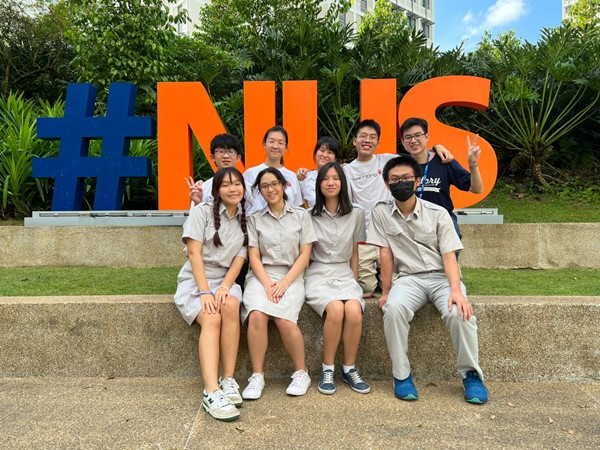
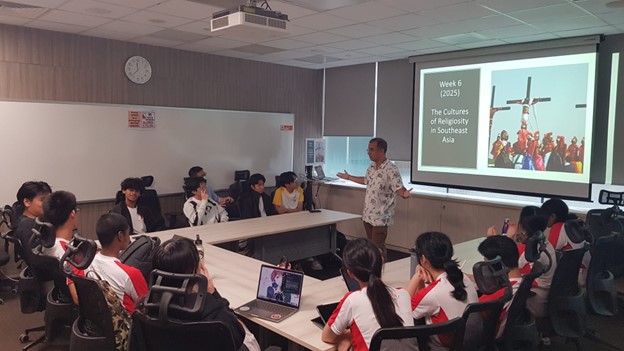
History students on a learning journey to the Department of Southeast Asian Studies, NUS
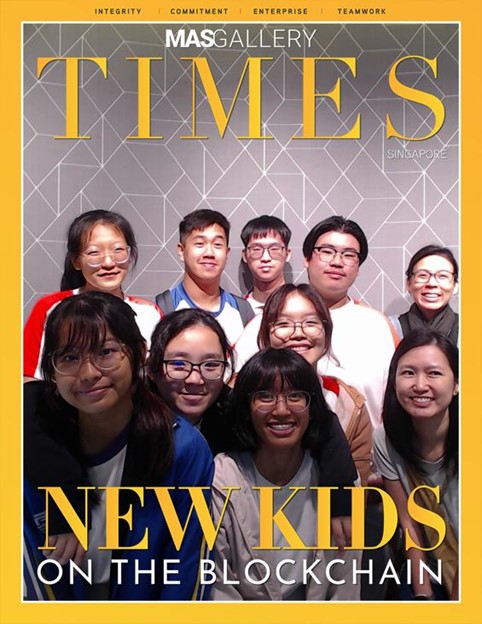
History students on a learning journey to the Monetary Authority of Singapore